

Diagnosis Code E22.0 Acromegaly
This all starts with my own journey to diagnosis.
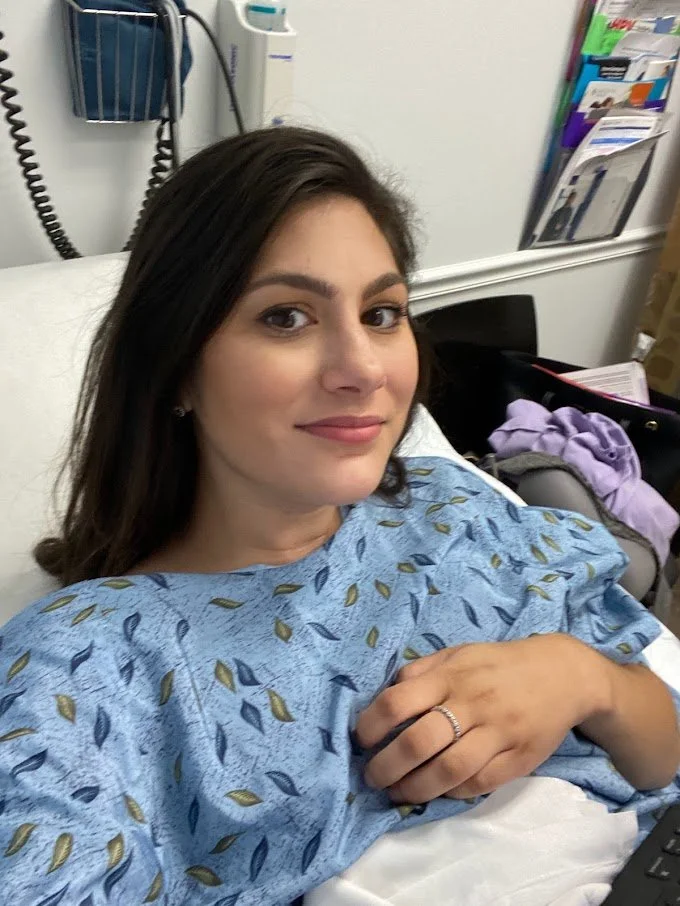
In the summer of 2025, an MRI solved the mystery behind a slow progression of symptoms that have plagued me for over 8 years—symptoms which have hijacked my life, from navigating day-to-day errands to forcing aside dreams and ambition in the face of uncertainty. Turns out, a brain tumor was behind the insidious onset of issues, and part of the healing process for me has been a deep reflection on advocacy, healthcare, and the status quo.
The healthcare system is broken.
For 8 years, I pressed and pressed on the mess that is the American healthcare system, looking for answers across 6 states, 8 hospital systems, and over 50 providers. I wasn’t looking for labels or attention, only answers. Yet, I sometimes felt guilty for asking questions, doing research, coming with symptom notes and an iPad full of data, and advocating for myself—shamed for overthinking because the system incentivizes underthinking.
Unfortunately, our healthcare system doesn’t make it easy for patients or providers. Working in the hallways of healthcare myself, I’ve heard the stories and know about the pressures on provider time and the many administrative barriers that get in the way of patient care, and these challenges threaten the sacred patient-provider relationship. The system incentivizes the use of well-founded heuristics and algorithms for the common case but breaks when met with the unexpected or complex one. It has evolved to look at an organ in isolation but not as part of a whole. It is built to handle an episode of care but not a lifetime of care. Insurance doesn’t reimburse for extra time spent on listening, empathy, and thinking outside the box unless you provide another exception form or letter of medical necessity.
It should not be this hard for patients.
Being a patient is hard work, and for me, managing my healthcare on my own has felt like a full-time job. Patients are at a disadvantage from the very start with the simple reality that they’re not feeling their best. Add to that the jargon, opaque processes, and asymmetric information layered into our healthcare system, and it’s easy to understand why there’s so much frustration and emotion around this topic. Patients are struggling to navigate the complex ecosystem on their own—often blind to the full picture of the economics driving their experience, the burdens on providers, and the resources and tactics that exist to improve access to care.
I feel such profound disappointment and sadness in the status quo when I take an honest inventory of my advantages and recognize that many others in America are looking for answers with even bigger hurdles than I’ve encountered.
-
Family and social support
A graduate degree, with a focus specifically on the business of healthcare
A deep network of healthcare professionals
Financial security
Health insurance
Health literacy
English as a first language
Privilege around race and citizenship status
No responsibilities of motherhood or as another type of caregiver
A supportive boss
A flexible work schedule
Generous leave and disability benefits
Access to mental health services
Access to large health systems in big cities
A car for local transportation
The ability to travel across state lines
Access to the Internet, a phone, a printer
When I think about the struggle in all those years it took to arrive at a diagnosis, I hurt to imagine how much longer it would have taken if even 2-3 of those advantages disappeared. Privilege should not be a prerequisite for good care.
Diagnosis makes me feel empowered, and I would love to help other patients and providers put the pieces together more quickly. It’s hard to know exactly how to make an impact in a system so complicated and built under massive corporations, but there’s got to be a better way to uplift ourselves and our neighbors who are just trying to feel well.
The good news? I’m finding my spark again.

I’m starting the process of forgiving myself for knowing what I’ve wanted to do in my head and heart and feeling like I’m constantly falling short because of my uncooperative body. Such a gap had emerged between the heights where my dreams lived and the realities on the ground with a limited physical capacity. I’d silently carried shame and guilt for not showing up the way I wanted to for my family, friends, pets, coworkers, and community—beating myself up under a growing suspicion that maybe my physical hurdles were imagined after they were shrugged off in appointment after appointment.
This disease had caused me to live in a small and safe way, stuck in a mindset of scarcity and self-preservation that has driven every life decision. I am so ready to embrace life head-on again, and with surgery behind me and new meds in my system, I’m starting to feel the first hints of relief physically. Not every disease can be met with intervention, and I will not squander this chance for recovery on small and safe actions anymore.
I’m ready to transform pain into purpose for you, me, and the next patient seeking answers.
About Acromegaly
-
My journey to diagnosis meant years of lab draws and imaging and trying to muddle my way through life, praying my body would cooperate. There finally came a point in June 2025 when I broke—and I knew something had to change. I took medical leave from work and put every last ounce of effort I had into getting an answer. An MRI of the head is one of the few things I hadn’t done, and I quite literally found myself in an appointment begging for one. The next day, the radiologist’s report came back identifying a tumor on my pituitary gland, and further bloodwork confirmed a diagnosis of acromegaly.
-
Acromegaly is a rare progressive disease caused by the overproduction of growth hormone (GH) in adulthood. Acromegaly is most commonly caused by a pituitary tumor, though it is possible for tumors in other locations to cause it as well.
While most pituitary tumors don’t secrete anything, the more rare kinds do. Acromegaly means that my tumor has been secreting excess growth hormone—we’re talking 8 times the normal amount for an adult. That excess hormone has been slowly wreaking havoc across my body.
For more information on acromegaly and for patient resources, visit Acromegaly Community.
-
Thankfully my tumor is non-cancerous. Nevertheless, it has caused widespread, daily pain and fatigue, impacted multiple organ systems, and disrupted everything from my heart to my sleep and even my teeth.
Acromegaly symptoms usually emerge slowly, making diagnosis tricky for a lot of patients. While the disease can have broad, systemic effects, its hallmark symptoms include:
Cardiometabolic disorders (sweating, fatigue, sleep apnea, high blood pressure, diabetes)
Thickening of skin and soft tissues
Growth of hands, feet, and jaw
Joint pain and stiffness
Vast hormonal changes
-
To have a diagnosis after all this time means I’m finally able to unlock treatments to address the root cause, not just the symptoms. But how much has the delay in diagnosis and care cost?
A missed window for a surgical cure
Disease progression with irreversible damage
Tens of thousands of dollars in out-of-pocket costs
My precious years of early adulthood
Years of worry
Feelings of guilt and shame
Over-apologizing and over-exerting
Questioning my own pain and sanity
Decisions that misaligned with my values, wants, and needs
Wasted time and productivity
Stress navigating work and workplace accommodations
-
I consider August 26, 2025 my re-birth day. I went to Mayo Clinic for neurosurgery and trusted my brain in the hands of a very experienced team of surgeons and staff. For some, surgery can remove the entire tumor. Unfortunately, with the tumor growing for at least 8 years, it had reached 18mm in size and grew around one of my carotid arteries. With that kind of encasement, surgery was only able to safely remove 70% of the mass, leaving the remaining portion to continue secreting excess GH.
Right after surgery, I could feel immediate changes in my body, but as the months went by, symptoms started re-emerging. It’s been a rollercoaster, and the end of the ride isn’t quite here yet. Through continued help from Mayo, I was treated with gamma knife radiosurgery that will slowly cause the tumor to degrade over the next few years. In the meantime, I’m taking medications to reduce overproduction of growth hormone (GH) and insulin-like growth factor-1 (IGF-1).
